
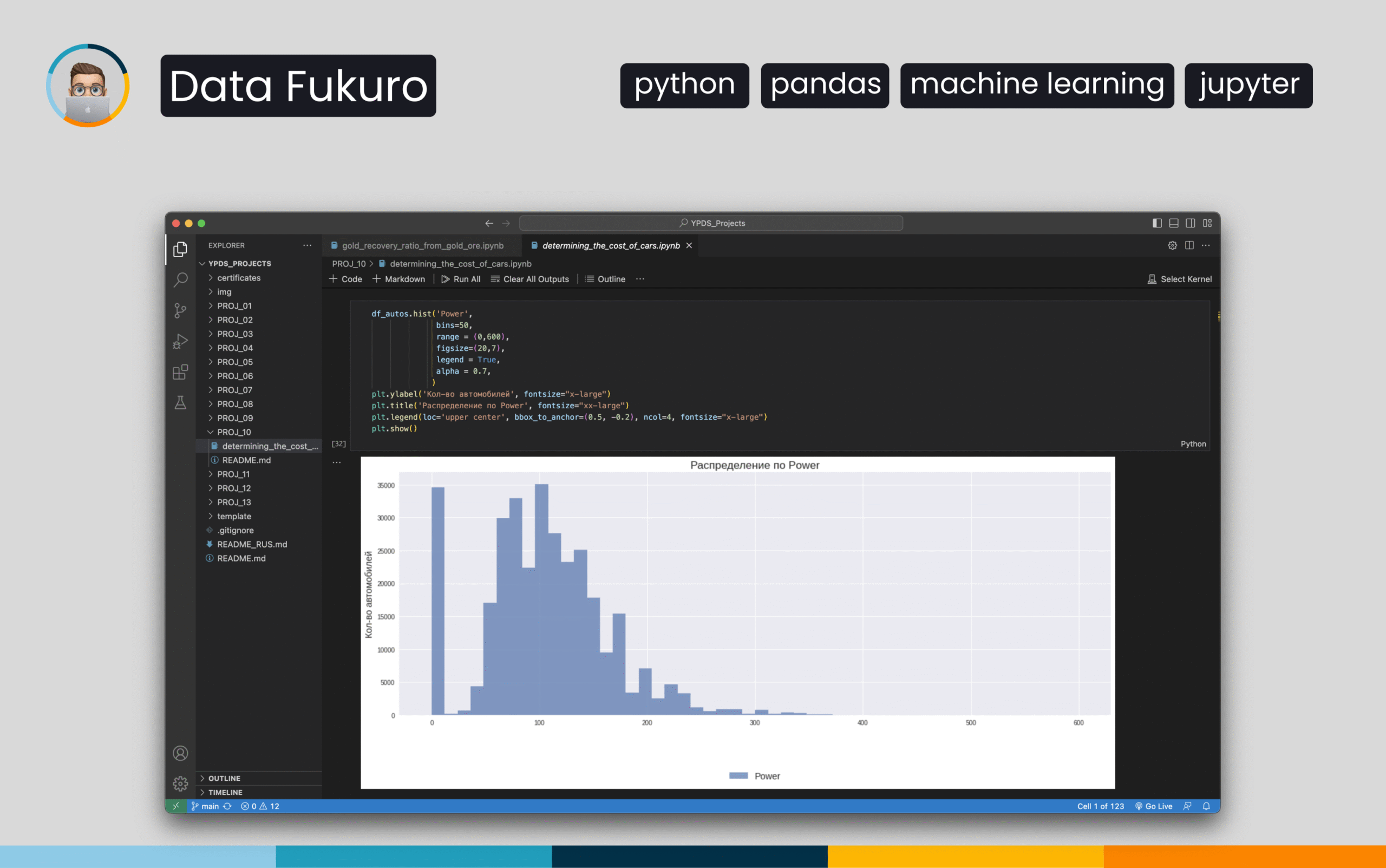
Project details:
This project builds and compares several regression models to predict the price of used cars. After cleaning the listings data and engineering meaningful features, different algorithms — including tree-based models and gradient boosting — were evaluated for speed and accuracy. The final model delivers strong performance and provides a reliable baseline for car-valuation systems.
Description
Business Context & Problem
Online car marketplaces rely on accurate price estimates to keep listings fair and competitive. If prices deviate too much from market norms, buyers lose trust and sellers may misjudge their vehicle’s value. This project focuses on using historical listings data to predict car prices and support a more consistent valuation process.
Data & Analytical Approach
The dataset included car specifications such as model, year, mileage, fuel type, engine power and several categorical attributes. After handling missing values and fixing inconsistencies, exploratory analysis helped reveal the strongest relationships between features and price. Feature engineering added meaningful variables, and rare categories were grouped to improve stability. The data was then split into training and validation sets for fair model comparison.
Statistical / ML Analysis
Multiple regression algorithms were tested — linear models, tree models and gradient boosting methods. Since price prediction has both accuracy and performance requirements, training speed was also evaluated. Models were tuned with cross-validation to improve generalisation. CatBoost and LightGBM showed the strongest results, achieving high accuracy with efficient training time. The best-performing model was selected based on RMSE and runtime metrics.
Key Insights & Final Recommendations
The analysis confirmed that mileage, production year and engine power have the most significant influence on price, while some categorical attributes contribute smaller but meaningful effects. The final model provides a strong baseline for car-pricing tools and can help platforms detect overpriced listings or assist users in estimating a fair value.
Overall, the project demonstrates a practical machine-learning approach for the used-car market with balanced accuracy and performance.